
Early Career Science Corner
Engage with APARC Early Career Scientists
How to get involved
First, make sure you hear all the latest APARC news
- Regularly check our APARC news
- Subscribe to the APARC eNews published every two months
- Stay informed by subscribing to the biannual APARC newsletter
You can also contribute to any of our news channels or submit an article to the APARC newsletter by contacting the APARC Office.
There are many ways to get involved in APARC:
- Contact APARC activity leaders if you are interested in getting involved in a particular research area – they always welcome participation!
- Get nominated or nominate yourself to become a member of the APARC Scientific Steering Group.
- Join the APARC Group within the YESS community for early career researchers.
- Improve your knowledge of APARC-related science, programming skills, and more, by making use of the vast array of learning resources available online and explore APARC’s video presentations and webinars.
Be Part of the Solution
Join the Climate Conversation
Collaborate with leading experts, explore groundbreaking research, and contribute to shaping a sustainable future. Together, we can make a difference.
APARC Webinars
SPARC’s 30th anniversary – webinar series
2022 marked the 30th anniversary of the World Climate Research Programme’s SPARC core project. In this time, SPARC has evolved into a major international research coordination hub for atmospheric sciences, with the primary goal to facilitate research that improves our understanding of atmospheric processes and their role in climate. SPARC’s initial focus was on stratospheric science linked to ozone depletion, but has expanded to cover the whole atmosphere including the coupled troposphere-stratosphere system and impacts on surface climate.
SPARC is particularly recognised for its lively scientific community. To celebrate SPARC’s achievements over the last three decades, we have held a series of three webinars leading up to the grand SPARC General Assembly in October 2022.
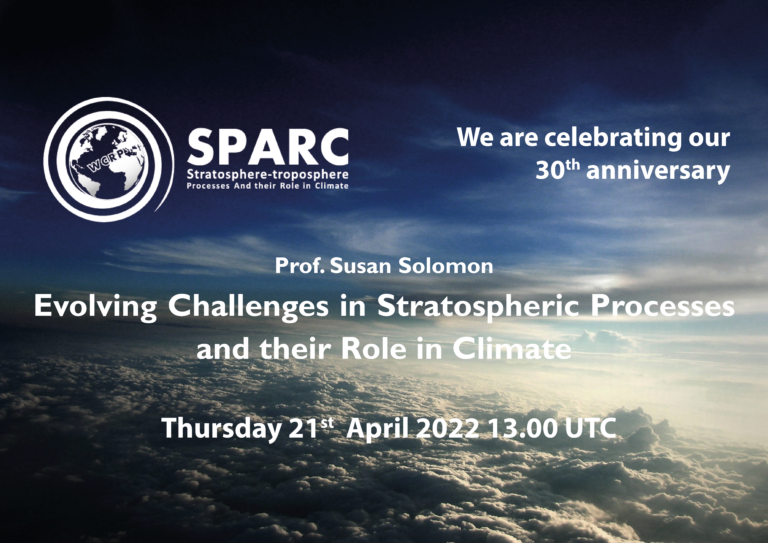
Our host for the webinar on 21st April 2022 was Prof. Susan Solomon from the Department of Earth, Atmospheric, and Planetary Sciences, Massachusetts Institute of Technology (MIT). She gave a presentation on “Evolving Challenges in Stratospheric Processes and their Role in Climate”, taking us through some history of how our science has experienced a succession of things that have challenged our understanding and how the science community rose to the challenges.
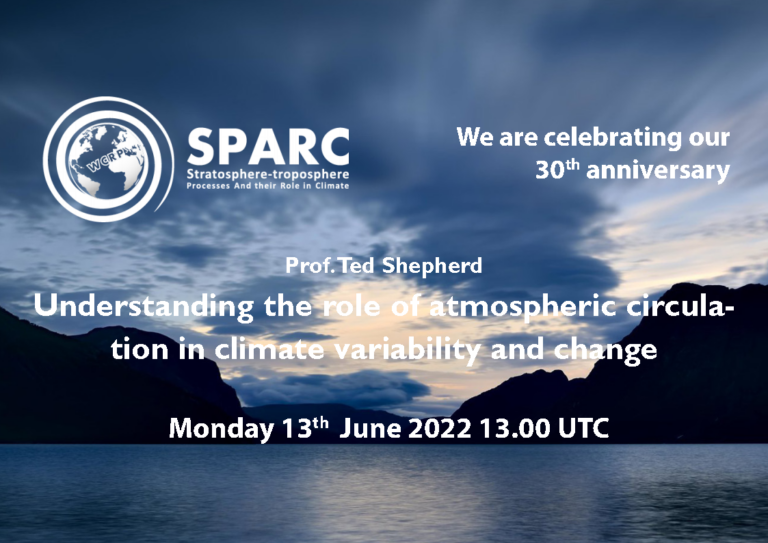
Our host for the webinar on 13 June 2022 was Prof. Ted Shepherd from the University of Reading and he gave a presentation on “Understanding the role of atmospheric circulation in climate variability and change”.
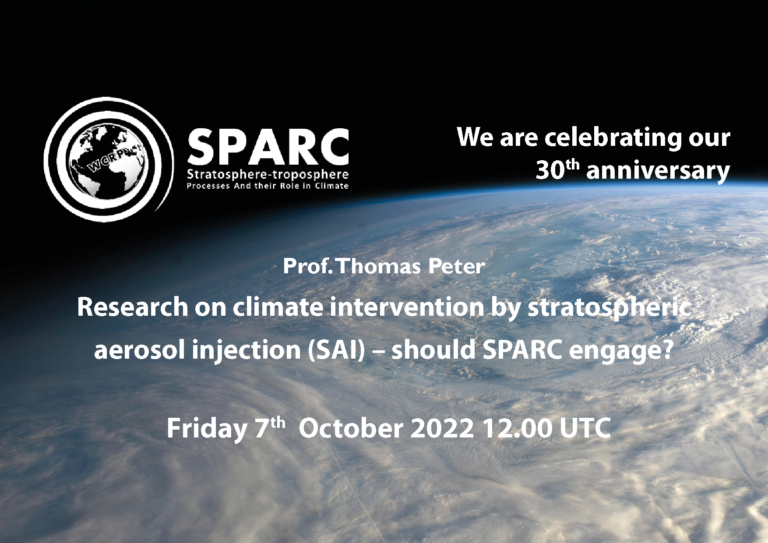
Our host for the webinar on 7 October 2022 was Prof. Thomas Peter from the ETH Zürich with a presentation on “Research on climate intervention by stratospheric aerosol injection (SAI) – should SPARC engage?”