YESS Community

YESS Community


APARC promotes the YESS (Young – Earth System – Scientists) community as its network for early career researchers. The YESS community provides an international and multi-disciplinary network for early career researchers, providing a collective voice and strengthening collaboration across the globe.

YESS is devoted to:

  • Providing a valuable communication platform for early career researchers across all disciplines of Earth System science – from both natural and social sciences – who represent the future of Earth system science.
  • Initiating and strengthening collaboration across the globe and disciplines.
  • Creating opportunities for establishing direct personal contacts whether it be at large interdisciplinary conferences or regional workshops.
  • Serving as a powerful partner with prominent international organisations to give early career researchers a collective voice.
  • Setting an example for the scientific community through our online presence, therefore reducing our carbon footprint and enabling interaction across diverse regions and cultures.

Anyone can join the YESS community, although it is aimed mainly at graduate students, post-docs, and those at an early stage in their career. Register to become a member today and don’t forget to become a member of the SPARC group to keep up-to-date on all the latest news from the APARC project.
Be Part of the Solution

Join the Climate Conversation

Collaborate with leading experts, explore groundbreaking research, and contribute to shaping a sustainable future. Together, we can make a difference.

APARC Webinars

SPARC’s 30th anniversary – webinar series

2022 marked the 30th anniversary of the World Climate Research Programme’s SPARC core project. In this time, SPARC has evolved into a major international research coordination hub for atmospheric sciences, with the primary goal to facilitate research that improves our understanding of atmospheric processes and their role in climate. SPARC’s initial focus was on stratospheric science linked to ozone depletion, but has expanded to cover the whole atmosphere including the coupled troposphere-stratosphere system and impacts on surface climate.

SPARC is particularly recognised for its lively scientific community. To celebrate SPARC’s achievements over the last three decades, we have held a series of three webinars leading up to the grand SPARC General Assembly in October 2022.

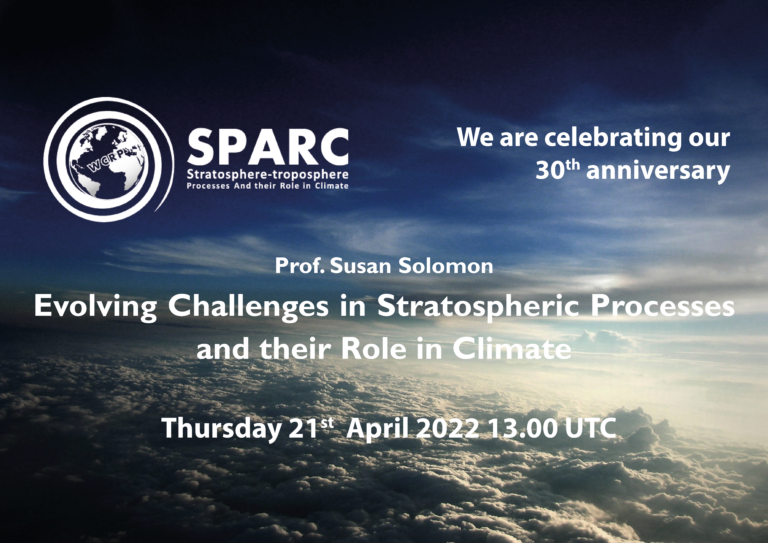
Our host for the webinar on 21st  April 2022 was Prof. Susan Solomon from the Department of Earth, Atmospheric, and Planetary Sciences, Massachusetts Institute of Technology (MIT). She gave a presentation on “Evolving Challenges in Stratospheric Processes and their Role in Climate”, taking us through some history of how our science has experienced a succession of things that have challenged our understanding and how the science community rose to the challenges.

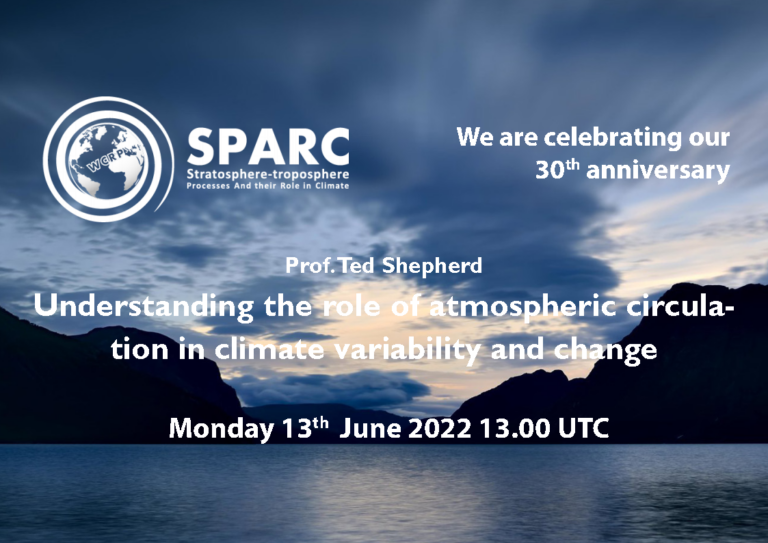
Our host for the webinar on 13  June 2022 was Prof. Ted Shepherd from the University of Reading and he gave a presentation on “Understanding the role of atmospheric circulation in climate variability and change”.

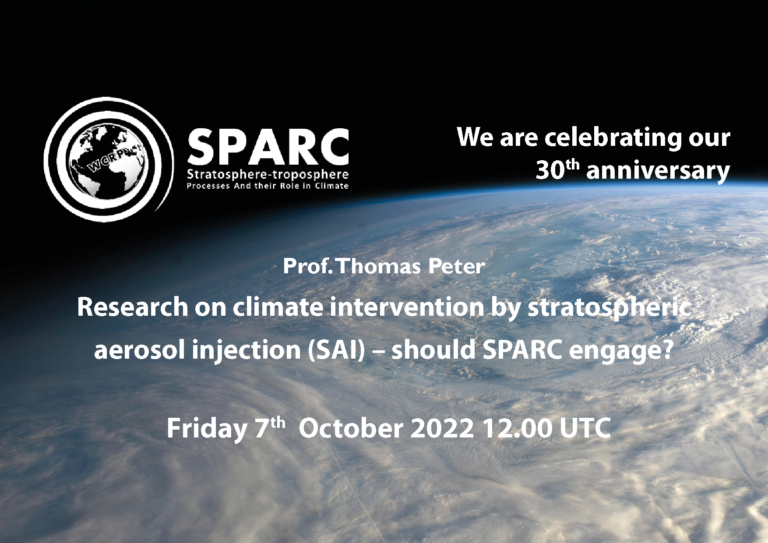
Our host for the webinar on 7  October 2022 was Prof. Thomas Peter from the ETH Zürich with a presentation on “Research on climate intervention by stratospheric aerosol injection (SAI) – should SPARC engage?

Nach oben scrollen