
APARC Office
The APARC International Project Office (IPO) is responsible for the coordination of scientific and administrative aspects of the APARC project and its activities under the oversight of the APARC Scientific Steering Group.
The APARC Office in Jülich is sponsored by

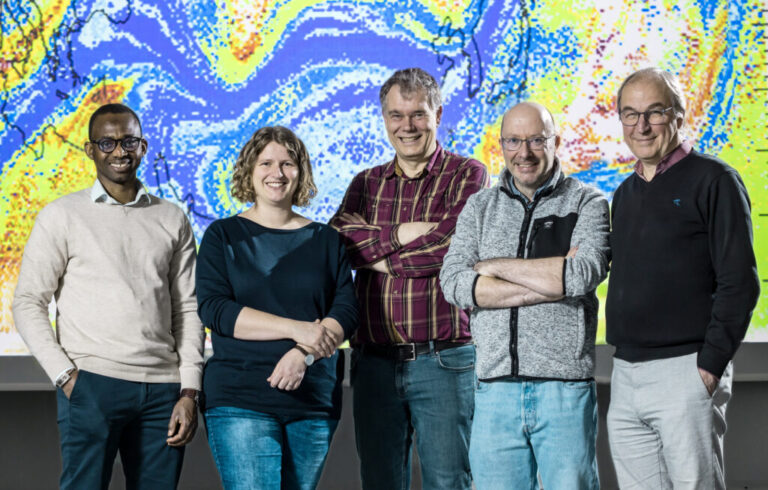
Contact the APARC Office in Jülich
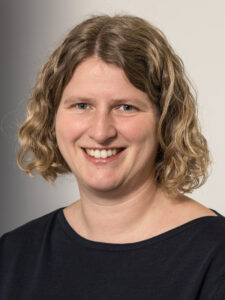
Dr. Ines Tritscher
Director
phone: +49 2461 9555
Biography
Olaf is interested in all aspects of composition-climate interactions. He was a lead developer of the UK Chemistry and Aerosols (UKCA) chemistry-climate model from its inception in 2003. After moving to NIWA in 2008, he has widened his research to cover various aspects of climate, in particular attributing global- and regional scale climate change to anthropogenic and other drivers, and has published extensively on tropospheric composition and climate trends. He has led NIWA’s involvements in the Chemistry-Climate Modelling Initiative and the Aerosol and Chemistry Model Intercomparison Project (AerChemMIP). The latter has informed the 6th Assessment Report of IPCC which he is also a Lead Author of. He is Science Leader Earth System Modelling for the Deep South National Science Challenge, has led several projects for the Deep South NSC, and is presently co-leading the “Modelling Clouds and Aerosols” project.
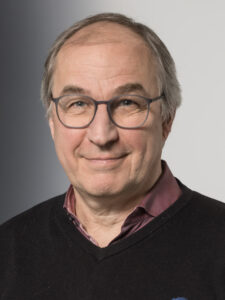
Dr. Rolf Müller
Director Emeritus
phone: +49 2461 61 3828
Biography
Karen is a Program leader and Senior Scientist for Climate and Climate Change at NOAA/ESRL. Her expertise is in interpretation of stratospheric constituent, aerosol, and temperature data. She is an author of 111 peer-reviewed journal publications. She co-chairs the SPARCs upper troposphere and stratosphere Water Vapor Assessment (WAVAS-II), served as lead author in the first SPARC water vapor assessment and participated in SPARC ozone trends and temperature activities. She is co-author for WMO/UNEP Scientific Assessments of Ozone Depletion; a reviewer and contributing author for IPCC, and a lead author for a GRUAN Network Expansion report.
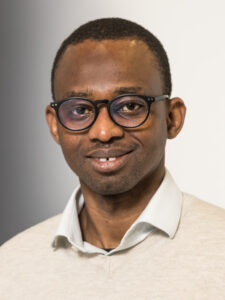
Dr. Mohamadou Diallo
Scientific Outreach Officer
phone: +49 2461 61 5292
Biography
Amanda Maycock is Associate Professor and Director of the Institute for Climate and Atmospheric Science at the University of Leeds. Her research covers climate variability and change across timescales, atmosphere-ocean interaction, midlatitude dynamics, teleconnections, stratosphere-troposphere coupling and atmospheric composition. Amanda co-led the SPARC activity Atmospheric Temperature Changes and their Drivers. She served as Lead Author of the IPCC WGI Sixth Assessment Report and Co-ordinating Lead Author of the 2018 WMO/UNEP Scientific Assessment of Ozone Depletion and was a member of the US CLIVAR working group on tropical widening. She led the SPARC Task Team to develop the new SPARC Strategy 2022-26.
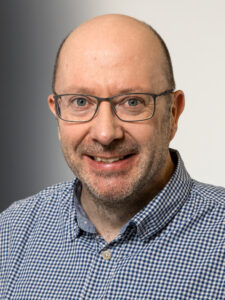
Dr. Lars Hoffmann
Scientific Officer
phone: +49 2461 61 1978
Biography
Olaf is interested in all aspects of composition-climate interactions. He was a lead developer of the UK Chemistry and Aerosols (UKCA) chemistry-climate model from its inception in 2003. After moving to NIWA in 2008, he has widened his research to cover various aspects of climate, in particular attributing global- and regional scale climate change to anthropogenic and other drivers, and has published extensively on tropospheric composition and climate trends. He has led NIWA’s involvements in the Chemistry-Climate Modelling Initiative and the Aerosol and Chemistry Model Intercomparison Project (AerChemMIP). The latter has informed the 6th Assessment Report of IPCC which he is also a Lead Author of. He is Science Leader Earth System Modelling for the Deep South National Science Challenge, has led several projects for the Deep South NSC, and is presently co-leading the “Modelling Clouds and Aerosols” project.
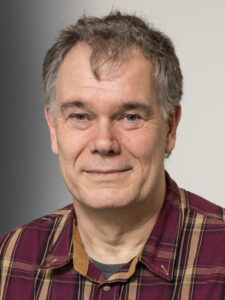
Dr. Olaf Stein
Scientific Officer
phone: +49 2461 61 2370
Biography
Olaf is interested in all aspects of composition-climate interactions. He was a lead developer of the UK Chemistry and Aerosols (UKCA) chemistry-climate model from its inception in 2003. After moving to NIWA in 2008, he has widened his research to cover various aspects of climate, in particular attributing global- and regional scale climate change to anthropogenic and other drivers, and has published extensively on tropospheric composition and climate trends. He has led NIWA’s involvements in the Chemistry-Climate Modelling Initiative and the Aerosol and Chemistry Model Intercomparison Project (AerChemMIP). The latter has informed the 6th Assessment Report of IPCC which he is also a Lead Author of. He is Science Leader Earth System Modelling for the Deep South National Science Challenge, has led several projects for the Deep South NSC, and is presently co-leading the “Modelling Clouds and Aerosols” project.
Biography
Ines received her Ph.D. in Atmospheric and Climate Science from ETH Zurich under the supervision of Thomas Peter. In her thesis, she studied polar stratospheric clouds (PSCs) through field, laboratory, and modeling work. Together with her colleagues, she demonstrated the importance of heterogeneous nucleation of solid PSC particles using detailed box models. She then moved to Forschungszentrum Jülich, where her postdoctoral research aimed at improving PSC formation parameterizations within the Chemical Lagrangian Model of the Stratosphere (CLaMS) for global modeling studies. During this time, Ines was co-leader of the PSC SPARC activity. SPARC has always played an important role in her scientific career and she is very happy to support the International Project Office of now APARC as Scientific Officer.
Biography
Rolf did his Ph.D work at the Max-Planck-Institut für Chemie in Mainz and obtained his Ph.D. from the Free University of Berlin. He works at the Forschungszentrum Jülich since 1995 and is the head of the theory group at the Institute of Climate and Energy Systems (ICE-4). The theory group has developed the Chemical Lagrangian model of the Stratosphere (CLaMS) and is also active in other fields including the support of measurement campaigns. He is also the deputy director at the ICE-4 and is a lecturer at the University of Wuppertal.
Biography
Born and educated in Senegal, Mohamadou (Moha) pursued his undergraduate and graduate studies in physics in France, at the University of Aix-Marseille. In 2013, Moha obtained his PhD at the Laboratoire de Météorologie Dynamique in France on the subject of variability and trends in the stratospheric circulation. For his studies he used a combination of reanalysis-driven Lagrangian models, climate models, and observations. After his PhD, he extended his experience with post-docs in the US, Spain, and Germany and worked on stratosphere-troposphere dynamical coupling, in particular the application of data science and machine learning to understand upper tropospheric and lower stratospheric processes. As part of his work as research scientist at the FZJ, Moha is responsible for APARC’s scientific outreach with the goals to foster partnerships between early-, mid-career, and established scientists in the Global South and North, data accessibility, public awareness, and capacity building. As part of this vision, Moha will take a lead in organising APARC training activities for early career scientists from both the Global South and North.
Biography
Lars received his Ph.D. in Physics from the University of Wuppertal in Germany. For more than two decades, he worked at Forschungszentrum Jülich on a wide range of topics, including atmospheric modeling, infrared remote sensing and radiative transfer, and high-performance computing. Lars has been actively involved in various research initiatives focusing on areas such as the intercomparison and validation of global reanalyses, and observational and modeling studies of stratospheric gravity waves. Currently, Lars is Head of Department of High Performance Computing in Applied Science and Engineering at the Jülich Supercomputing Center (JSC). He is responsible for the coordination and supervision of JSC’s contributions to the APARC Project Office.
Biography
Olaf has more than 20 years of experience in atmospheric modelling. He graduated as meteorologist at University of Bonn on statistical anlyses of weather varibility. Afterwards, his research concentrated on global modeling of tropospheric and stratospheric chemistry at the Research Centre Jülich. He worked in the EU projects GEMS and MACC as well as for the Copernicus Atmospheric Monitoring System (CAMS) by implementing a chemical transport scheme into ECMWF’s IFS model. Olaf is member of the Simulation Laboratory Climate Science at the Jülich Supercomputing Centre, responsible for Earth System Modelling applications and development including ICON. As PI in the Helmholtz Pilot Lab ExaESM he managed ESM dwarf developments and separation of concerns. In the Joint Lab ExaESM he is activity lead for Exascale ESM workflow scalability.
Postal Address
APARC Office
c/o Forschungszentrum Jülich GmbH
ICE-4 (Stratosphere)
Wilhelm-Johnen-Straße
D-52428 Jülich, Germany